Bertrand Russell (1872-1970) was an eminent British philosopher and is considered one of the greatest philosophers of the 20th century. He was both a brilliant mathematician, a logician and a moralist. He popularized the philosophy and was a left-wing supporter. Russell was also a prolific writer. Medium- HB and 3B pencils
:)
Showing posts with label writer. Show all posts
Friday, March 27, 2020
Thursday, March 12, 2020
Wednesday, December 19, 2018
'Still I Rise'- A Portrait of Maya Angelou
Tried Derwent Pastel Pencils today. Pastel pencils are far more easier than bar pastels for these provide much control and neatness. The paper used is Brustro 160 gsm A5 pastel paper. This paper is not smooth but is slightly dotted in texture which I think, is not very appealing.
This is a pastel portrait of Maya Angelou, the great American writer. Her poem 'Still I Rise' is one of my favorites!
Saturday, April 22, 2017
Becoming Jane
Jane Austen is an important name in
English literature. She was born on 16 December,
1775 in England and breathed her last on 18 July, 1817. This is a review
of her Biopic- ‘Becoming Jane’ that was released in 2007.
“Affection is desirable, money is
absolutely indispensable”, tells an exasperated Mrs Austen to
Jane, her talented daughter who is single minded focused upon making a living
out of writing or “living by my pen”
as she declares with evident confidence. The 2007 movie ‘Becoming Jane’ depicts the journey of the second daughter of one respected
but middle class Austen family that lived in Hampshire, England in the
Victorian era during the reign of King George III. The movie begins with her
trying her hands at the piano at their huge house deep in the country side and
confessing her love of writing to her good-natured but hapless elder sister
Cassandra. Her clergyman father, Reverend Austen, feels proud of Jane’s aspirations
but her mother scorns her writing and wants her to focus solely upon getting
married before her age slips by. Then, in her otherwise single and insipid
life, like a breath of fresh air, arrives Tom Lefroy (Thomas Langlois Lefroy) a young but penniless law student living
off his snooty uncle’s pittance. After some initial misunderstandings and arguments,
they fall deeply in love. However, they are star crossed and as the Cupid seems
to be sullen with the match, they separate but after sometime despite being
engaged to a rich girl, Lefroy again asks for his former lover’s hand, for he
realizes the depth of his feelings for that beautiful and sensible budding
writer. Here, the story takes another spin and we see Jane taking a decision
she does not regret. Years later, she is shown to have become a famous writer
and often addressed as ‘The Jane Austen’ with awe and admiration by everyone.
The movie has many other interesting characters and if you have read ‘Pride and Prejudice’ that was initially
titled ‘First Impressions’ you will
be easily able to identify many of the characters of the novel like Lady Catherine,
Willam Darcy, Mr. Collins, Jane and of course, Elizabeth Bennet who was inspired
by author’s very own self. Her personal life only was the inspiration for this work,
except that the ending was as she had always desired her love life to be- happy
and prosperous.
Returning
to the movie, actress Anne Hathaway who has portrayed Jane Austen, has delivered
a praiseworthy performance. However, she differs much from the author in person
as unlike hers, Austen’s face was round and features were smaller. The
Victorian styled flowing dresses, old-school chivalry, feather hats, ballroom
parties, churches, houses, horse-carriages and the beautiful English
countryside are enough to create a likable background, imparting a real appeal
to the movie. The dialogues are well penned and the pace is neither fast nor
slow. However, initially it becomes a bit confusing to remember the characters
as so many of them are introduced all of a sudden within minutes. Apart from
that, this movie is pretty enjoyable and throws much light not only upon Jane
Austen’s headstrong persona, maturity and love for literature & writing but
also upon the condition of women who were coerced by the society to direct all
their wit and charms in securing good
husbands for themselves as well as upon the pitiable state of women writers in
that era. This movie does not cover her final days; she died young at the age
of 41 of a prolonged illness.
Rating-
4/5
Tuesday, March 28, 2017
Arundhati Roy
Suzanna Arundhati Roy (24 November, 1961) is
a famous Indian author. Her debut novel ‘The God of Small Things’ won her the much coveted ‘Man Booker Prize’ for Fiction in 1997. This novel then went on to become the
biggest-selling book by a non-expatriate Indian author. She was born in Shillong, Meghalaya to a Bengali Hindu father and
a Keralite Syrian Christian mother. She
is the cousin of media personality Prannoy Roy of NDTV.
Medium- Pencil Colours
Sunday, July 31, 2016
Book Review: Lajja
Author: Taslima Nasrin
Publ.: Penguin India
ISBN: 978-0-140-24051-1
MRP: Rs 250
Pages: 216
The
Sanskrit word ‘Lajja’ literally means ‘Shame’. This book makes
one think about the basic tenets upon which a nation must be built. The
firebrand writer Taslima Nasrin shot to fame with this novel that first came
out in Bengali language in 1993 and was banned by the Bangladesh government after
a few months of release. Since then Ms. Nasrin has come in the hate-radar of
Islamic clergy and fundamentalists. This novel is more of a mirror that shows
the society and the government of Bangladesh their real faces that are indescribably
ugly. However, despite getting numerous death threats and after years of exile,
the author still refuses to apologize or to be silenced. I think Ms. Nasrin can
be called a writer in the truest sense because her work is powerful and deep
enough to bring a change in thinking, to show a whole nation its ugliness and
to make a dent in the rotten perceptions, changing their track to some extent.
That is why Lajja is considered an important book.
Through
a fictional story, the disastrous effects of the ‘Babri Masjid’ demolition upon
Bangladeshi Hindus are shown. Many true-life incidents and census analyses have
been provided so that each point made has a factual backing.
The
story revolves around one Dutta family that resides in a place called ‘Tikatuli’
in Bangladesh. Dr. Sudhamoy Dutta, the head, I think, represents the ideal fundamentals
upon which the country was conceived. A true patriot and honest to the core, Dr.
Sudhamoy fervently takes part in all the national movements but is left alone, ill
and paralyzed in his later years; his idealism fails him and he gets reduced to
a mute spectator to the crumbling principles, increasing hate-crimes and death
of secularism in his beloved country after its liberation. This is what
Bangladesh has been shown to become after gaining independence- weakened by injustice,
stripped of idealism and paralyzed by genocide.
His
son Suranjan Dutta represents the educated and optimistic Hindu youth. At 33,
he remains unemployed because of hatred and unfriendly laws against Hindus and
thus unmarried as well. He is somewhat of an idealist too and loves his country
ardently. However, just like most Hindu youths, he gets nothing but discrimination
and antipathy. Finally, his spirit of secularism dies out leading to depression.
The way he takes his revenge on a street-worker Shamima, is heart rendering.
Kironmoyee
Dutta, Suranjan’s mother is a silent, religious, sacrificing, but unhappy woman
who broods in the background throughout the novel, though she puts up in any
and every situation stoically with her family, esp. her husband. She represents
the under-privileged Bangladeshi Hindu masses that love their country but desire
to leave for a ‘safe’ place like Calcutta. After a point, her tears dry out and
she submits to her husband and her fate.
Twenty-one
years old Maya, the youngest child of Duttas’, is a beautiful and educated young
woman and represents the dignity of Hindu women that gets brutalized and lost
in the sacrilege and torture inflicted upon the Hindus by their own Muslim
brethren.
The
family keeps holding on to its idealism, loyalty, and patriotism even when they
face poverty and destruction by Muslims enraged over the Babri demotion. However,
when the old bonds get strained by bias and intolerance, their hopes hit a hard
ground and start cracking up. Apprehensively, Duttas arrive upon a decision
they could not even think of earlier.
It
is surprising that the book has been written by a Muslim as the author rips
apart the hypocrisy of the Bangladeshi government, hell-bent upon Islamizing
the entire country and their apathetic and barbaric behavior towards the very same
Hindus who once stood by their side in various movements against the oppressors.
She openly accuses the religious fundamentalists and even the common Muslim citizens
of a prejudiced behavior. There are no purple passages because the purpose of
the book is altogether different. Interestingly, Ms. Nasrin completed this book
in seven days.
Lajja
is not only revealing because of the facts and figures given but it makes one
think about the disastrous effects of power going in the hands of
fundamentalists. It shows how intolerance, fanaticism and bigotry eat-up secularism
and peace in such a nation.
Tuesday, January 7, 2014
Book Review: Wages of Love
Author: Kamala Das
Editor: Suresh Kohli
Publi: Harper Collins India
ISBN: 978-93-5029-723-0
MRP: Rs 299/-
Pages: 176
Year: 2013
Year: 2013
‘The
rain is on our lips,
We do not run for prize.
But the storm the water whips
And the wave howls to the skies.
The winds arise and strike it
And scatter it like sand,
And we run because we like it
Through the broad bright land.’
-Charles Hamilton Sorley,
‘The Song of the Ungirt Runners’
When
Sorley wrote these lines, of course he did not have Kamala Das on his mind, but
they seem to suit her persona perfectly! Das never tried to hide her true emotions or wore a mask, and presented
the reality blatantly. She was truthful about her affairs and very critical of
the double standards of the society. Born to a top corporate executive father
and a writer mother, she was connected to the royal family of Kerala as well.
She spent her childhood in Kolkata and Kerala and was married at the age of 16
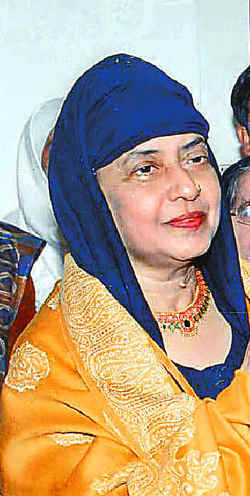
to a much older, rich man. Her writing drips with pain and grim realities of lives of women esp. of those trapped in bad and loveless marriages. Das, in her lifetime sparked many controversies. From entering politics, refuting Khushwant Singh’s accusations that she spread rumors of her Nobel nomination in 1984, to the biggest one about her conversion to Islam at the age of 65. She openly admitted a sexual relationship with a much younger Islamic Scholar for whose love, she embraced Islam. Later she lamented this decision, again, very openly. She died in 2009 at the age of 75.
When I came across this book, it caught my attention instantly. I was really keen on reading books by the famous feminist ‘enigma’ known as Kamala Das! The book has been edited by Suresh Kohli, a Delhi based author and critic and is divided into three parts- Fiction, Non-Fiction and Poetry. Apart from a few short stories, most of the fiction is in the form of small plays. ‘A Week with Mansi’ is a story of a secret affair between a married woman and a young politician. The play, ‘Why Make the Baby Cry?’ shows the insensitivity of a husband towards his wife lying on deathbed. ‘Neipayasam’ is a touching story about a father’s struggle to manage his young children after his wife’s sudden death. ‘We Have Been Really Lucky’ surprisingly, has a positive message and is quite inspiring. The stories and plays are enjoyable, no doubt.
I found the next section the most interesting. In
Non-Fiction, Das has expressed her views on various matters in compact,
to-the-point style. In ‘Body Is a Mere Container’ she writes about her
depression after her husband’s death, when she wanted to hang herself. Her
meeting with Arundhati Roy in ‘Talking of Arundhati Roy’ and in ‘Thoughts
On Sahitya Akademi’ she openly condemns Akademi’s retrograde stance and
reluctance to bring in freshness in literature. The most enjoyable is ‘Indigestion
and Hospitality’ wherein she describes how Indians like to torture their
guests in the name of hospitality.
Her
poetry is really stirring as she writes mostly on social topics relating to
haplessness of women. Basically, Das was a hardcore feminist and every word of
her is tinted with this view. The poem ‘Temples’ is really haunting. It
describes the despicable conditions of old widows. Other poems too, are worth
reading.
Her
work is explicit in parts, reflects contempt for society and distrust for
men. Das was anything but a hypocrite and presented naked truth in her usual,
no-holds-barred style. I liked this book and I think it is a good read.
Images from
Google.com
Subscribe to:
Posts (Atom)