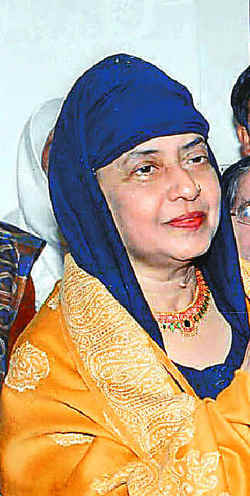
Title: WAGES OF LOVE – Uncollected Writings
of Kamala Das
Author: Kamala Das
Editor: Suresh Kohli
Publi: Harper Collins India
ISBN: 978-93-5029-723-0
MRP: Rs 299/-
Pages: 176
Year: 2013
‘The
rain is on our lips,
We do not run for prize.
But the storm the water whips
And the wave howls to the skies.
The winds arise and strike it
And scatter it like sand,
And we run because we like it
Through the broad bright land.’
-Charles Hamilton Sorley,
‘The Song of the Ungirt Runners’
 When
Sorley wrote these lines, of course he did not have Kamala Das on his mind, but
they seem to suit her persona perfectly! Das never tried to hide her true emotions or wore a mask, and presented
the reality blatantly. She was truthful about her affairs and very critical of
the double standards of the society. Born to a top corporate executive father
and a writer mother, she was connected to the royal family of Kerala as well.
She spent her childhood in Kolkata and Kerala and was married at the age of 16
to a much older, rich man.
Her writing drips with pain and grim realities of lives of women esp. of those trapped in bad and loveless marriages. Das, in her lifetime sparked many controversies. From entering politics, refuting Khushwant Singh’s accusations that she spread rumors of her Nobel nomination in 1984, to the biggest one about her conversion to Islam at the age of 65. She openly admitted a sexual relationship with a much younger Islamic Scholar for whose love, she embraced Islam. Later she lamented this decision, again, very openly. She died in 2009 at the age of 75.
When I came across this book, it caught my attention instantly. I was really keen on reading books by the famous feminist ‘enigma’ known as Kamala Das! The book has been edited by Suresh Kohli, a Delhi based author and critic and is divided into three parts- Fiction, Non-Fiction and Poetry. Apart from a few short stories, most of the fiction is in the form of small plays. ‘A Week with Mansi’ is a story of a secret affair between a married woman and a young politician. The play, ‘Why Make the Baby Cry?’ shows the insensitivity of a husband towards his wife lying on deathbed. ‘Neipayasam’ is a touching story about a father’s struggle to manage his young children after his wife’s sudden death. ‘We Have Been Really Lucky’ surprisingly, has a positive message and is quite inspiring. The stories and plays are enjoyable, no doubt.
 I found the next section the most interesting. In
Non-Fiction, Das has expressed her views on various matters in compact,
to-the-point style. In ‘Body Is a Mere Container’ she writes about her
depression after her husband’s death, when she wanted to hang herself. Her
meeting with Arundhati Roy in ‘Talking of Arundhati Roy’ and in ‘Thoughts
On Sahitya Akademi’ she openly condemns Akademi’s retrograde stance and
reluctance to bring in freshness in literature. The most enjoyable is ‘Indigestion
and Hospitality’ wherein she describes how Indians like to torture their
guests in the name of hospitality.
Her
poetry is really stirring as she writes mostly on social topics relating to
haplessness of women. Basically, Das was a hardcore feminist and every word of
her is tinted with this view. The poem ‘Temples’ is really haunting. It
describes the despicable conditions of old widows. Other poems too, are worth
reading.
Her
work is explicit in parts, reflects contempt for society and distrust for
men. Das was anything but a hypocrite and presented naked truth in her usual,
no-holds-barred style. I liked this book and I think it is a good read.
Images from
Google.com